Compromise Assessment
We find out if attackers are already inside your network. We look for indicators of compromise, persistence and unauthorized access, before the damage grows.
What is Compromise Assessment?
We investigate your environment to find out if an attacker is already inside. You do not need a known incident to start. Incident response reacts to an attack you already see. A compromise assessment hunts for attacks your security controls missed.
We look for indicators of compromise (IOCs), suspicious behavior, persistence, traces of lateral movement and other signs of an attacker. We examine endpoints, logs, network traffic and infrastructure. The goal is to find a hidden attacker before a small breach becomes a major incident.
The Critical Question
"Are we compromised?"
A compromise assessment answers this question. We hunt for attackers and signs of a breach that your security tools did not detect.
Why Compromise Assessment Matters
- Hidden Threat Discovery: Find attackers who got past your security controls and are still active
- Reduce Dwell Time: Find and remove attackers before they settle in or steal data
- Validate Security Controls: Test whether your defenses actually work against real-world attack techniques
- Risk Reduction: Decrease the likelihood of data breaches, ransomware, and business disruption
- M&A Due Diligence: Check the security of a company before a merger, acquisition or major deal
- Compliance Support: Show regulators that you check for attackers before an incident
What We Analyze
We investigate your whole environment
Endpoint Analysis
Forensic examination of workstations and servers for malware, persistence and suspicious activity.
- Memory and disk forensics
- Malware artifact detection
- Registry and startup analysis
- User activity investigation
Threat Intelligence
We use threat intelligence to find known IOCs, TTPs and attacker infrastructure in your environment.
- IOC correlation against feeds
- TTP matching (MITRE ATT&CK)
- APT group attribution
- Threat actor profiling
Validate Leaked Credentials
We check your organization's credentials against known data breaches and dark web leaks. This shows which accounts are compromised.
- Breach database correlation
- Dark web monitoring
- Email and domain exposure check
- Password compromise validation
Indicators We Hunt For
Signs of attack at each stage, from first access to data theft
Malware & Backdoors
Unknown malware, webshells, remote access tools, and persistent backdoors.
C2 Communications
Command-and-control channels, beaconing activity, and attacker infrastructure.
Lateral Movement
Pass-the-hash attacks, remote execution, and suspicious account usage.
Privilege Escalation
Unauthorized privilege escalation, credential dumping and access abuse.
Data Exfiltration
Large data transfers, unusual upload activity, and sensitive file access.
Persistence Mechanisms
Registry modifications, scheduled tasks, service creation, and startup items.
Validate Leaked Credentials
Employee credentials exposed in data breaches, dark web leaks, and public dumps.
Defense Evasion
AV/EDR tampering, log deletion, obfuscation techniques, and anti-forensics.
Assessment Methodology
Six steps, from scope to remediation plan
Scoping & Planning
Define the scope, list the critical systems and agree on which data we collect.
Data Collection
Gather logs, endpoint forensics data, network captures, and configuration information for analysis.
Threat Hunting
Search for IOCs, suspicious patterns and attacker TTPs, using threat intelligence and behavioral analysis.
Forensic Analysis
Investigate each suspicious finding. Rebuild the timeline and correlate events across data sources.
Impact Assessment
If we find an attacker, we measure the extent: affected systems, exposed data and business impact.
Reporting & Remediation
Deliver the findings with evidence, prioritized recommendations and a remediation plan.
When to Conduct a Compromise Assessment
Six situations where a compromise assessment gives you a clear answer
Suspicious Activity Detected
Your security tools flag unusual behavior. They can't confirm a compromise or show how far it goes.
Merger & Acquisition
Before you buy a company or are bought, check that the target network does not hide an attacker.
Industry Breach
A breach hits your industry or a similar organization. Check if you were also targeted.
Insider Threat Concern
Investigate potential malicious insider activity or data theft without alerting the suspected individual.
Regular Security Validation
Periodic assessments check that your environment is still clean and your defenses still work.
Post-Incident Validation
After an incident response, verify that the attacker is gone and has not come back.
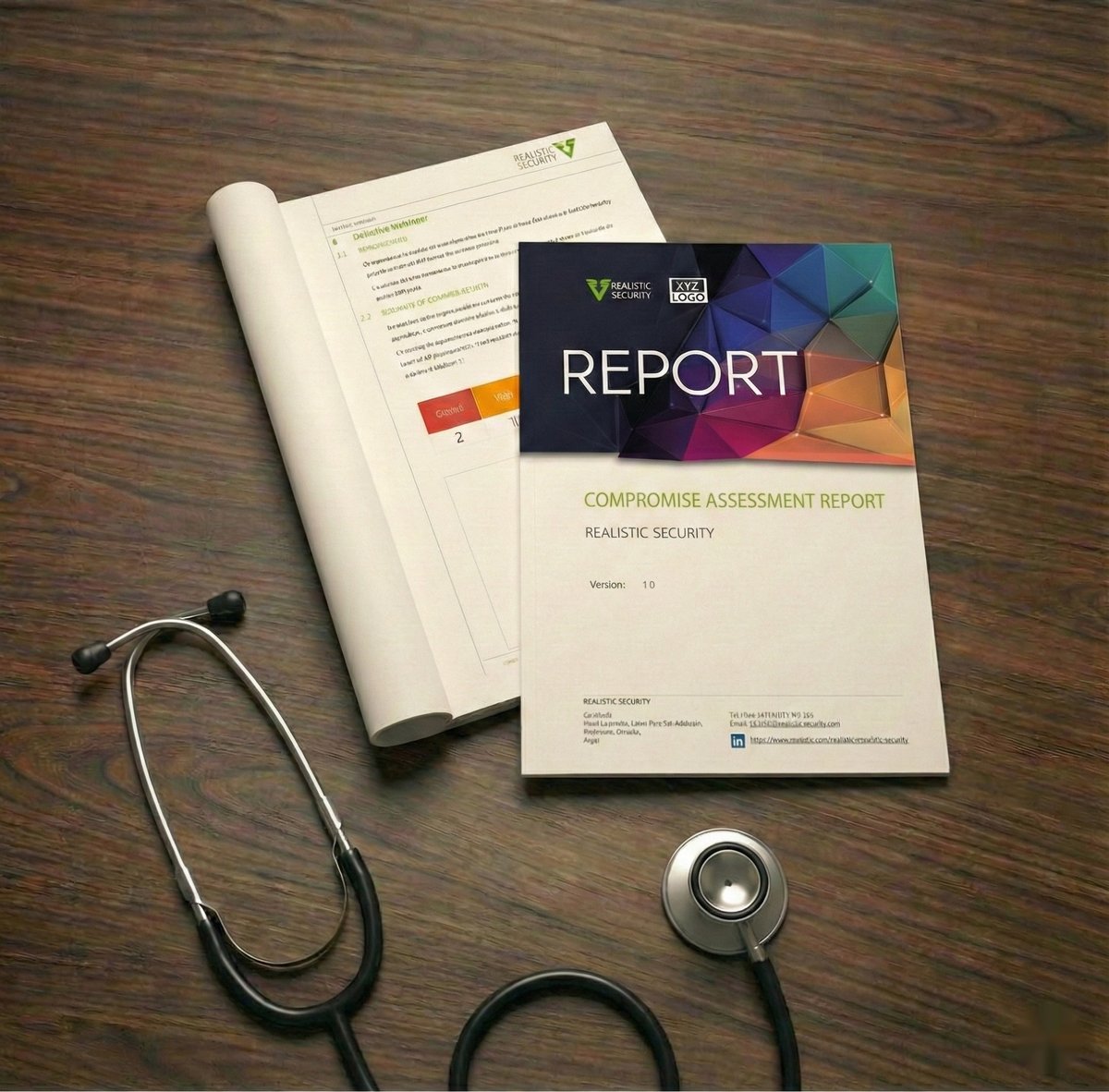
Assessment Report
Our report gives clear findings, evidence and recommendations. You get it whether we find an attacker or not.
Executive Summary
Main findings, risk and business impact, written for leadership.
Technical Findings
Detailed evidence of any discovered threats including IOCs, TTPs, affected systems, and attack timelines.
IOC Package
Exportable indicators of compromise in standard formats (STIX, MISP, CSV) for ongoing monitoring.
Remediation Roadmap
Prioritized actions to remove threats, fix security gaps and improve detection.
Answer the Question: Are We Compromised?
Don't wait for a breach notification. Our assessment either confirms your environment is clean or finds the attacker before more damage is done.